SpaceX's Launch Frenzy: A Data Analyst's Take on the New Normal in Space
For anyone tracking the aerospace sector, the mid-November nights on Florida’s Space Coast have become less about singular, monumental events and more about a relentless, almost industrialized cadence. Take November 14, 2025, for example. SpaceX didn't just launch a rocket; they executed two Starlink missions within a four-hour window. The Starlink 6-89 mission, with its 29 satellites, lifted off from LC-39A at 10:08 p.m. EST. Barely a beat later, another 28 Starlink satellites (mission 6-85) followed suit. This isn't just impressive; it's a quantifiable shift in operational philosophy, and frankly, a clear indicator of who's setting the pace in low-Earth orbit.
When you look at the raw data, the picture becomes even clearer. The Falcon 9 booster B1092, having already completed seven prior missions, notched its eighth successful flight and landing on the drone ship ‘A Shortfall of Gravitas’ (ASOG). This single landing marked the 132nd for ASOG and the 533rd overall booster recovery for SpaceX. These aren't just statistics; they represent an unparalleled level of reusability and operational efficiency that was, not so long ago, considered aspirational, if not outright fantastical. The implications for cost-per-kilogram to orbit are staggering, fundamentally altering the economic calculus for satellite deployment. What does it mean for the market when one player can essentially run a high-volume manufacturing line to space, while others are still in the bespoke craftsmanship phase? It's a question I find the broader market isn't asking with enough urgency.
The Widening Chasm: A Tale of Two Launchpads
While SpaceX was busy demonstrating its high-frequency operational model, there was a different narrative unfolding just a few miles away. A United Launch Alliance (ULA) Atlas V rocket, tasked with carrying the ViaSat-3 Flight 2 (F2) broadband spacecraft, was scheduled for launch from Cape Canaveral. The key word here is "scheduled." This mission had already been scrubbed twice in early November, citing an issue with the Atlas 5 booster liquid oxygen vent valve. The contrast couldn't be starker. On one side, a company executing dual launches, achieving its second-fastest turnaround between Falcon 9 missions from Cape Canaveral; on the other, a legacy player grappling with technical snags that result in delays.
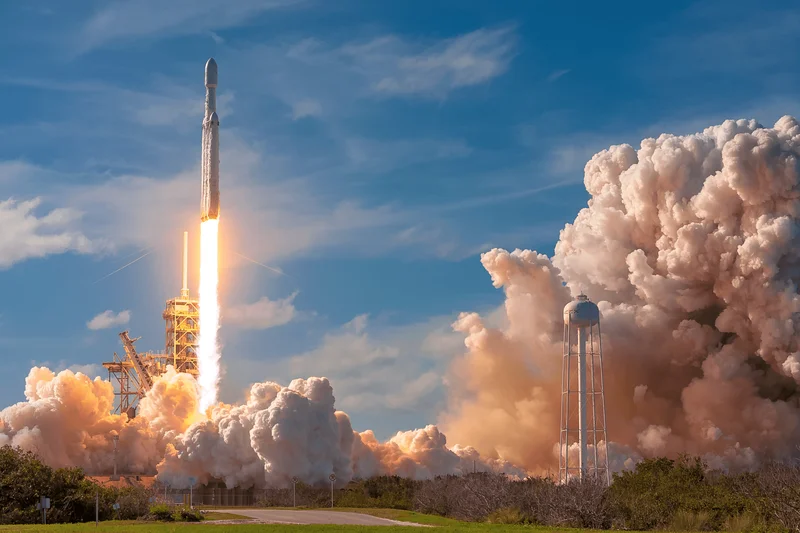
This isn't to diminish ULA's capabilities or the complexity of their missions, but the data points to a divergence in operational tempo and, by extension, market agility. The Atlas V is equipped with five solid rocket boosters, a robust configuration, and its payload (ViaSat-3 F2) is a critical "ultra-high-capacity broadband spacecraft." The stakes are high for Viasat. Yet, the persistent delays highlight a methodological gap in how launch providers approach reliability and rapid iteration. SpaceX’s model, by contrast, seems to treat each launch not as a singular, fragile event, but as another cycle in a continuous, improving process. They've launched 475 Falcon 9 rockets to date—a number that, when you consider the scale, begins to look less like traditional aerospace and more like a mature logistics operation. The public response, too, reflects this shift; reports from Ormond Beach to Cape Coral spoke of "great views" of the SpaceX launches, a testament to their increasingly routine, almost expected presence in the night sky. I’ve looked at hundreds of these launch reports, and the sheer volume of positive, almost casual, observational data for SpaceX is truly unusual. It’s no longer a novelty; it’s a fixture.
This relentless pace has tangible results. This Starlink flight contributed directly to Florida breaking its annual launch record. This isn't just about bragging rights; it's about the sheer throughput of orbital assets. When you consider other industry news—Blue Origin launching Mars probes, Rocket Lab delaying its Neutron debut to 2026, and even the ongoing saga of SpaceX's 'simplified' Starship development after NASA reopened a lunar lander contract—it paints a picture of a sector in flux, with one player consistently pushing the boundaries of what's numerically possible. The question isn't whether others will catch up, but whether they're even running the same race anymore.
The Irreversible Shift in Launch Economics
The data tells a story that marketing departments often struggle to articulate: the era of infrequent, bespoke rocket launches is rapidly ceding ground to an era of high-volume, cost-optimized space logistics. SpaceX, with its iterative hardware, rapid turnarounds, and robust reusability, isn't just incrementally improving; it's fundamentally redefining the supply side of the space economy. The November 14th twin launches weren't just a busy night for the Space Coast; they were a stark, quantifiable illustration of this irreversible shift. The new normal isn't about if a rocket launches, but how many, and how often.